
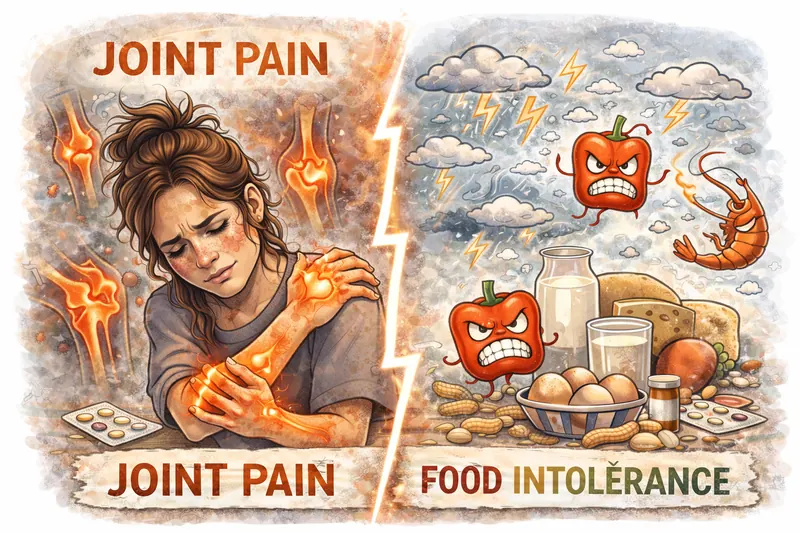
FOOD SENSITIVITY & JOINTS

Joint Pain: Could Your Diet Be Causing Inflammation?

Achy, stiff joints without an obvious structural cause may be influenced by ongoing dietary inflammation. IgG food sensitivity testing can help identify which foods your immune system is reacting to.

  • Chronic low-grade inflammation from food reactions can settle in joints
  • IgG-guided elimination has helped many people reduce systemic inflammatory load
  • Results are personal — your reactive foods may differ widely from averages
Joint pain and food sensitivity connection
Medical review: Reviewer information pending — this page is awaiting sign-off by a named clinical reviewer.

INFLAMMATION AND YOUR JOINTS

When Food Drives Systemic Inflammation

Joints are particularly vulnerable to systemic inflammation. When ongoing IgG food reactions generate circulating inflammatory markers, those signals can accumulate in joint tissue — contributing to the achiness, stiffness, and swelling some people experience without an obvious structural cause.

ðŸĶī Systemic Reach

Inflammatory markers produced by IgG immune reactions circulate throughout the body and can affect tissues far from the gut — including joint capsules and surrounding soft tissue.

🍅 Nightshade Foods

Tomatoes, peppers, aubergine, and potatoes are among the foods most frequently associated with joint discomfort in food sensitivity reports, though individual reactions vary considerably.

🌊 Morning Stiffness

Waking up with stiff joints that take time to "warm up" is a hallmark of inflammatory processes. Some people notice this easing significantly during structured elimination trials.

📉 Reducing the Load

Removing the foods your immune system reacts to most strongly reduces the daily inflammatory burden — which may support a more comfortable joint response over time.

COMMON QUESTIONS

Frequently Asked Questions

Can food sensitivity cause joint pain?

Some clinical observations suggest that chronic IgG food reactions may contribute to systemic inflammation that manifests as joint discomfort or stiffness. This is distinct from autoimmune conditions like rheumatoid arthritis and should be evaluated separately by a rheumatologist.

Which foods are most linked to inflammatory joint symptoms?

Nightshade vegetables (tomato, pepper, aubergine), wheat, dairy, and certain processed foods are frequently cited in anecdotal and clinical reports. Your IgG profile from Pinnertest reflects your personal antibody response — not a generic list.

How long does it take for joint symptoms to improve on elimination?

Joint-related improvements typically take longer to manifest than digestive ones — often 4–8 weeks of consistent elimination. Inflammation resolves gradually, and reintroduction should be slow and monitored.

Should I see a rheumatologist before testing?

Yes. Persistent or severe joint pain must be evaluated medically to rule out autoimmune disease, infection, or structural injury. IgG food sensitivity testing is a complementary dietary tool — not a substitute for rheumatological care.

Medical disclaimer: Joint pain can indicate serious rheumatological or orthopaedic conditions. Always consult a qualified physician or rheumatologist. This page is educational only.

SOURCES & FURTHER READING

Research Supporting This Page

The information on this page is informed by published clinical and mechanistic research on IgG-guided elimination diets and food sensitivity. For a curated selection of peer-reviewed studies with summaries and context, visit our Featured Medical Studies page.

This page is for educational purposes only and does not constitute medical advice. Always consult a qualified healthcare professional before making significant dietary changes.

PinnerTest kit NEW

Pinnertest 120

120 Foods
PDF Report
$199
PinnerTest kit

Pinnertest 200

200 Foods
Limited access to portal
(Online Report, Food Details, FAQ)
$249
PinnerTest kit NEW

Pinnertest 250

250 Foods
Full access to portal
(Online Report, Food Details, Label Scanner, Custom Recipe Generator, AI Assistant, FAQ)
$349